
Property Tidy Up Services in Whangārei: Sell Your Home Faster and Increase Property Value
What Are Property Tidy Up Services and Why Do They Matter in Whangārei?
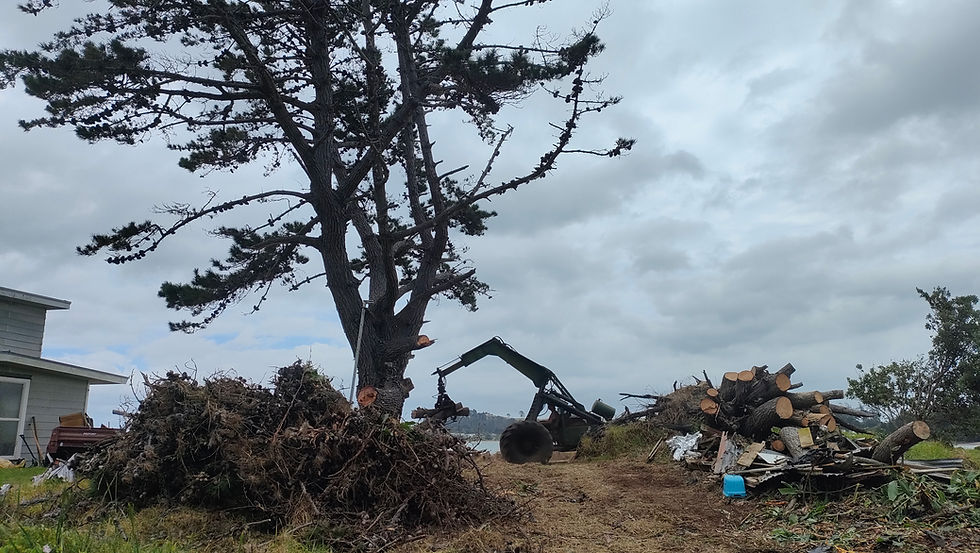
Property tidy up services are professional pre-sale preparation solutions that transform the exterior of a residential property into a market-ready, buyer-ready presentation standard. In Whangārei, these services typically include expert tree pruning and removal, stump grinding, section clearing, green waste removal, and access path clearing all designed to eliminate the visual and structural barriers that prevent buyers from recognising the full value of a property.
Whangārei's subtropical climate means vegetation grows quickly and aggressively year-round. What looks manageable in spring can become overgrown and
unwelcoming by the time a property goes to market. Northland buyers — many of whom travel from Auckland specifically seeking lifestyle properties, coastal sections, and homes with mature outdoor environments — form their initial impression the moment they arrive at the kerb. That impression is shaped almost entirely by what they see before they step inside.
According to local real estate data, properties presented by Ray White Whangārei through structured auction campaigns sold in a median of just 22 days, compared to the Whangārei residential average of 48 days. The agents who consistently achieve those results name high-quality presentation as the primary driver — not pricing or timing.
Property tidy-up is not cosmetic maintenance. It is strategic value positioning that directly influences how long your home sits on the market and how much buyers are willing to offer.
How Does Property Presentation Affect Sale Price in Whangārei?
In Whangārei's real estate market, a property's exterior condition functions as the buyer's first negotiation signal. A well-maintained section tells buyers the property has been cared for, is safe, and requires minimal immediate expenditure. An overgrown or neglected exterior tells them the opposite — and they price their offers accordingly.
New Zealand property professionals and real estate data consistently confirm several key patterns:
Buyers form a value judgment within the first few seconds of arriving at a property. This judgment is emotional before it is analytical. A cluttered, overgrown, or hazardous-looking exterior triggers caution, reduces emotional attachment, and directly lowers the ceiling on buyer offers. A clean, open, well-structured section triggers confidence and lifestyle aspiration — the two emotional drivers behind competitive bidding.
Professional landscaping and tree management, when done correctly, can add 12 to 20 percent to a property's perceived market value. This is not simply an aesthetic uplift. Buyers subtract the estimated cost of future remediation — tree removal, stump clearing, scrub control, section cleanup — from the price they are willing to offer. Professional tidy-up work removes that subtraction entirely.
In Northland's lifestyle property segment, where buyers are purchasing a vision of outdoor living as much as a building, the gap between a well-presented exterior and a neglected one can represent tens of thousands of dollars in final sale outcomes.
What Does a Complete Property Tidy Up Service Include?
A complete property tidy-up in Whangārei covers every element that contributes to the exterior presentation and structural safety of a property. DCTrees specialises in the arborist-led components of this work — the elements that most significantly influence buyer perception and property safety compliance.
Tree Pruning and Crown Management
Tree pruning is the most visible and impactful exterior improvement available to Whangārei homeowners before sale. The goal is not simply to cut branches — it is to reveal space, improve light, eliminate hazard, and reframe the property's visual relationship with its trees.
DCTrees certified arborists apply industry-standard techniques including crown lifting, which raises the canopy above a tree's lower structure to open ground space and improve light penetration; crown reduction, which reduces overall tree size while preserving natural form; crown thinning, which improves airflow and visibility through the canopy; and structural dead wooding, which removes dead, dying, or crossing branches that signal neglect and create physical hazard.
In Northland's subtropical conditions, trees grow faster and more aggressively than in most other parts of New Zealand. Properties that have not received professional tree care in the previous two to three years frequently show significant canopy encroachment, branch extension over rooflines, and dense understorey growth that reduces the apparent size and usability of a section. These are precisely the issues that buyers notice immediately and translate into reduced offers.
Please note that DCTrees does not provide hedge trimming or hedge management services.
Tree Removal and Technical Dismantling
When a tree must be removed — whether due to structural failure, disease, poor placement, or obstruction of land use — DCTrees provides safe, technically precise removal across all difficulty levels. This includes high-difficulty technical dismantles requiring specialised rigging, lowering, zip-lining, and cradling in constrained spaces; machine-assisted and crane-assisted felling for large specimens; and controlled removal adjacent to buildings, fencing, power infrastructure, and sensitive structures.
All removed material is fully cleared from the property. The site is left clean and ready for immediate photography, staging, or lawn restoration.
Stump Grinding
Tree stumps are among the most overlooked value inhibitors in property presentation. After a tree is removed, an unground stump interrupts lawn usability, signals incomplete maintenance, and draws the eye in ways that diminish an otherwise clean section.
DCTrees grinds stumps to below ground level, restoring full lawn continuity and removing one of the most common objections raised by buyers and their property inspectors.
Section Clearing and Vegetation Management
Northland sections that have not been professionally managed for one to three years frequently develop dense scrub regrowth, invasive pest plant establishment, and accumulated storm debris that significantly reduces the apparent usable area of a property. Section clearing reveals the true size and potential of a section — often transforming buyer perception from "overgrown problem" to "outstanding opportunity."
DCTrees clears overgrown scrub and bush regrowth, removes invasive plant species, processes fallen timber and storm debris, and manages long-unmanaged understorey vegetation. All organic material is chipped or removed from site.
Green Waste and Debris Removal
All tree work, section clearing, and vegetation management generates significant volumes of organic material. DCTrees removes all debris fully and responsibly after every job — no waste remains on site. The property is left in photography-ready and open-home-ready condition from the moment our team departs.
Storm Damage Response
Northland experiences significant weather events, particularly during the cyclone season, that can cause sudden and severe tree damage. DCTrees provides rapid storm response for fallen trees, broken and hanging limbs, root plate uplift, and blocked access areas. Fast, professional storm recovery protects both property safety and sale timeline.
When Should You Book Property Tidy Up Services Before Selling in Whangārei?
The timing of property tidy-up work is as important as the work itself. Booking too late compresses the preparation timeline and risks presenting a property before all improvements have settled into their best possible appearance.
The recommended timeline for Whangārei homeowners preparing to sell is as follows.
Six to eight weeks before your intended listing date: Contact DCTrees for an on-site assessment and quote. This is the right time to plan tree removal, stump grinding, and major section clearing — work that requires the most recovery and settling time before photography.
Four to six weeks before listing: Complete all major tree work. This allows time for stump areas to settle, lawn growth to recover from any ground disturbance, and chipped material to be redistributed or removed.
Two to four weeks before listing: Address garden beds, lawn restoration, path clearing, and fence repairs. Commission a professional real estate photographer once all exterior work is complete.
One to two weeks before listing: Final presentation touches — mulching garden beds, replacing any damaged letterbox or house number, ensuring exterior lighting is functional and attractive for evening viewings.
Leaving tree and vegetation work until the week before listing is one of the most common and costly mistakes Whangārei homeowners make in the sale preparation process. The results of professional arborist work need time to read as intentional and polished, not rushed.
How Do Trees Specifically Affect Property Value in Northland?
Trees are simultaneously one of the most powerful value assets and one of the most common value risks in the Whangārei and Northland property market. Understanding this distinction is essential for any homeowner preparing to sell.
Healthy, well-maintained mature trees enhance property value in measurable ways. They provide shade and climate comfort — strategically placed trees can reduce summer energy costs by up to 25 percent, which is a genuine selling point for buyers conscious of running costs. They create privacy screening that would take decades to establish from scratch, which buyers in Northland's lifestyle property segment value highly. They provide aesthetic framing that positions a home as settled, established, and worth the asking price. And they contribute to the Northland lifestyle image — connection to nature, outdoor living, and subtropical greenery — that motivates many buyers to leave Auckland for Whangārei in the first place.
Unhealthy, poorly managed, or badly positioned trees do the opposite. Overgrown canopies that block light from living spaces reduce the apparent liveability of a property. Branches extending over rooflines trigger immediate concern about insurance, maintenance costs, and potential damage. Root systems lifting driveways or disrupting fencing signal structural problems that buyers assume will be expensive to resolve. Dense vegetation that reduces the visible size of a section prevents buyers from mentally inhabiting the outdoor space — and Northland buyers are purchasing outdoor space as much as any other feature of the property.
The difference between a property whose trees have been professionally managed before sale and one whose trees have been left unmanaged is not simply visual. It is the difference between buyers who arrive and immediately start imagining how they will live there, and buyers who arrive and immediately start calculating what it will cost them to fix it.
DCTrees helps Whangārei homeowners reach the former outcome on every property we work on.

Do You Need Whangārei District Council Consent for Tree Work Before Selling?
Yes, in some circumstances. Whangārei District Council (WDC) has specific rules governing the removal, pruning, and management of protected and scheduled trees within the district. These rules exist to protect significant heritage trees, native species, and trees of ecological value — and the fines for non-compliant removal can reach up to $300,000.
Before undertaking any significant tree work on a property you intend to sell, it is essential to understand whether any trees on your section are subject to WDC protection rules. Attempting to remove a scheduled or protected tree without resource consent creates legal liability that can complicate or block a property sale.
DCTrees arborists are fully familiar with Whangārei District Council tree regulations and will advise you on compliance requirements before any work begins on your property. This is part of the service — not an afterthought. We will identify any trees that require consent, assist you in understanding the correct process, and plan all work within the boundaries of applicable district and national regulations.
If you are unsure whether a tree on your property is protected, contact DCTrees before taking any action.
Step-by-Step Property Tidy Up Guide for Whangārei Homeowners
The most effective property tidy-ups follow a structured sequence. Each stage builds on the one before it, and skipping stages or reversing the order creates rework and increases cost.
Stage One — Walk the Property as a Buyer
Begin at the street. Stand where buyers will first see your property and look at it honestly. Note every tree that appears hazardous, overgrown, or poorly shaped. Note every area where vegetation obscures usable space. Identify stumps, dead wood, invasive plants, access problems, and sections of fencing that are being damaged by root growth or overhanging branches. This assessment becomes the scope of your property tidy-up brief.
Stage Two — Book Tree Work First
Tree work always comes first in the tidy-up sequence. Tree removal, pruning, and stump grinding affect everything that follows — the light falling on garden beds, the amount of recoverable lawn, the volume of debris that needs removal, and the final visual balance of the section. Contact DCTrees early in your timeline. We will visit the property, assess every tree, provide a clear quote with options, and complete all arborist work to a standard that is ready for photography.
Stage Three — Section Clearing
Once tree work is complete, address any remaining scrub, invasive plants, and overgrown understorey growth. This is the stage that most visibly transforms a property — revealing usable land that buyers may not have known existed.
Stage Four — Lawn and Garden Restoration
Mow and edge lawns. Weed and mulch garden beds. Shape remaining hedges and ornamental shrubs. Address any bare patches of lawn that resulted from stump grinding or root disturbance. This is the stage that gives the section its finished, intentional appearance.
Stage Five — Hard Surfaces and Structures
Water-blast driveways, paths, and decks. Repair or repaint fencing. Replace damaged pavers. Check that all gates are functional. Ensure exterior lighting is working and appropriate for evening viewings.
Stage Six — Final Presentation and Photography
Once all work is complete and the section has had time to settle, commission a professional real estate photographer. High-quality exterior photography of a well-managed tree canopy and tidy section is one of the most powerful tools available for Trade Me Property and agency listing performance in the Northland market.
Pre-Sale Property Presentation Checklist for Whangārei
Use this reference before confirming your listing date.
Tree and Vegetation Condition
All trees have been assessed by a certified arborist. Dead wood, crossing branches, and structural defects have been removed. The canopy has been lifted to open ground space and improve light beneath mature trees. Any trees that were hazardous, diseased, or obstructive to land use have been removed. All stumps have been ground to below ground level. No branches extend over rooflines, fencing, or power lines. Invasive plants and pest species have been cleared from the section.
Section and Ground Condition
The section is free of all debris, fallen branches, and storm material. All green waste has been removed from the property. Lawn has been mowed, edged, and restored where ground disturbance occurred. Garden beds have been weeded and mulched. The visible size and usability of the section is maximized.
Hard Surfaces
Driveway has been pressure-washed and is clear of debris. All paths are clean and unobstructed. Deck or patio has been water-blasted and repaired where necessary. Fencing is intact, painted or stained, and not being lifted by root growth.
Final Presentation
House numbers are clearly visible from the street. Letterbox is in good condition. Exterior lighting is functional. No clutter, junk, or equipment is visible anywhere on the section. Photography has been commissioned and completed.
Property Tidy Up Return on Investment: What Whangārei Sellers Should Know
The investment in professional property tidy-up services consistently delivers returns that exceed the cost of the work. The mechanism is straightforward: buyers subtract the estimated cost of future remediation from the price they are willing to offer. Professional tidy-up work removes that subtraction.
In practice, a Whangārei homeowner who spends $2,000 to $5,000 on professional tree pruning, stump grinding, and section clearing before listing is typically removing $8,000 to $20,000 worth of perceived remediation cost from the buyer's mental calculation — while simultaneously improving emotional engagement with the property. The net effect on final sale price is consistently positive, and the effect on days on market is frequently significant.
Properties that are presented at a high standard generate more enquiries, attract more competitive offers, and spend less time on the market. In Whangārei's current real estate environment, where well-priced and well-presented properties are selling significantly faster than the market average, professional pre-sale presentation is not optional for sellers who want the best possible outcome.
DCTrees provides transparent, no-pressure quotes with multiple options for every property we assess. We tailor our recommendations to your sale timeline, your budget, and your goals — not to a standard package.
Which Areas Does DCTrees Serve for Property Tidy Up in Northland?
DCTrees provides certified arborist-led property tidy-up services across Whangārei and the wider Northland region, including:
Central Whangārei, Kensington, Regent, Morningside, Otātara, Raumanga, and Tikipunga. Northern Whangārei including Kamo, Mairtown, and Maunu. Eastern Whangārei including Onerahi, Horahora, One Tree Point, and Ruakākā. Coastal Northland including Mangawhai, Langs Beach, Bream Bay, the Tutukaka Coast, and Ngunguru. Rural Northland properties across the Hikurangi, Maungaturoto, and wider Northland region.
If you are unsure whether your property falls within our service area, call us directly. We travel for the right job and are happy to discuss your requirements.
Common Property Tidy Up Mistakes Whangārei Sellers Make
Booking tree work in the final two weeks before listing. Tree removal, stump grinding, and major section clearing require settling time before they photograph well. Book at least four to six weeks before your intended listing date.
Attempting DIY tree removal or pruning. Trees over four metres, trees near power lines or structures, and any tree with structural defects require a certified arborist. DIY tree work carries serious injury risk, risks damage to property and neighbouring sections, and may breach Whangārei District Council regulations — creating compliance issues that complicate a property sale.
Removing healthy mature trees that add value. Not every large tree is a liability. A well-maintained mature pohutukawa, pūriri, or specimen tree can be one of your property's most significant value assets. DCTrees will advise you honestly on which trees to retain, manage, and remove — based on your sale goals and the specific characteristics of each tree.
Neglecting the exterior while improving the interior. In Whangārei's lifestyle property market, the exterior drives buyer decision-making more powerfully than it does in many other markets. An immaculate interior accessed through an overgrown section will still produce a dampened buyer response.
Failing to check council rules before removing trees. WDC tree protection rules apply regardless of your intent to sell, your timeline, or your budget. Removing a scheduled tree without consent creates legal exposure that can block a settlement.
How early before listing should I start a property tidy-up in Whangārei?
The minimum recommended lead time is four to six weeks before your intended listing date for properties requiring tree work and section clearing. For properties with significant tree removal, large stumps, or extensive section clearing, six to eight weeks allows sufficient settling time before photography. Contact DCTrees as early as possible in your sale preparation timeline we can work around your schedule.
Does tree condition really affect how much my property sells for in Northland?
Yes, directly and significantly. Buyers translate visible tree hazards, overgrown canopies, and unmanaged sections into estimated remediation costs, which they subtract from their offer. Well-maintained trees and a clean section remove that subtraction and improve buyer confidence — both of which support stronger final sale prices.
Do I need resource consent from Whangārei District Council to remove trees before selling?
Potentially, yes. WDC protects certain scheduled and heritage trees within the district. Removing a protected tree without consent can result in fines up to $300,000. DCTrees will check compliance requirements for your specific property and trees before any work begins.
What is the cost of a property tidy-up with DCTrees in Whangārei?
Cost depends on the number, size, species, and structural complexity of the trees involved, access conditions, and the scope of section clearing required. DCTrees visits every property before quoting and provides multiple options tailored to your budget and goals. Contact us for a site visit and transparent quote.
Does DCTrees remove all green waste and debris after property tidy-up work?
Yes. All timber, branches, chipped material, and organic debris is fully cleared from your property after every job. You will not be left with material to dispose of. The section is left in ready-to-photograph condition.
Does DCTrees do hedge trimming as part of property tidy-up?
No. DCTrees specialises in arborist-level tree work and does not provide hedge trimming or hedge management services. For hedge work, we recommend engaging a Whangārei garden maintenance operator.
Can DCTrees advise which trees to keep and which to remove before selling?
Yes. Our certified arborists will assess every tree on your property and provide honest, expert advice on retention, management, and removal — based on your sale objectives, the structural condition of each tree, compliance requirements, and the likely buyer response to each tree in the context of your property.


Comments